One platform. Three layers. Limitless potential.
Zinier FSM is based on three interconnected layers. Each layer adds distinct value, and together they form a cycle of improvement that delivers compounding benefits over time.
Core
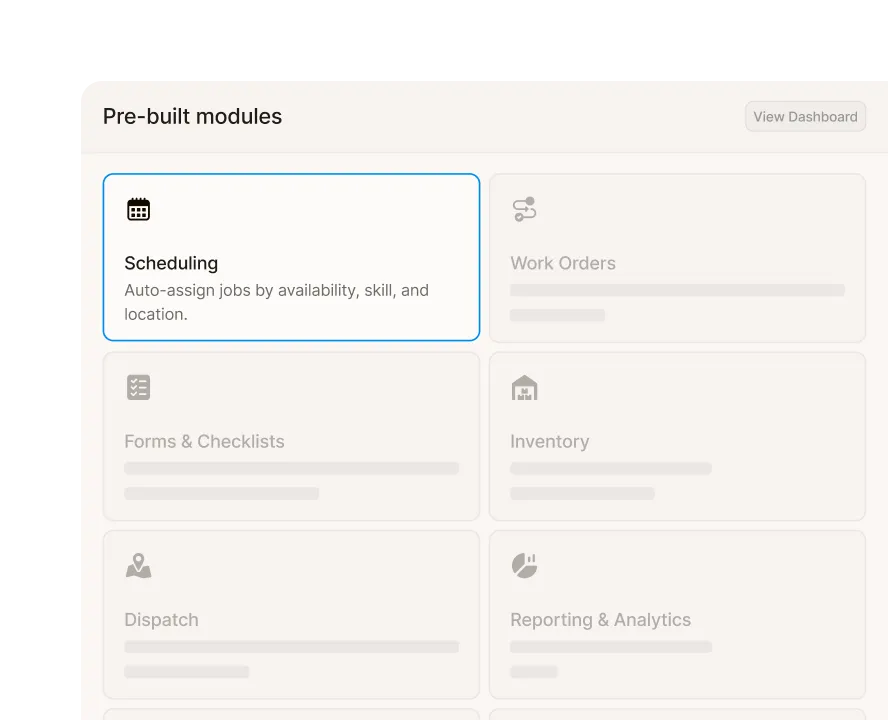
Workflows, modules, and integrations combined to form a digital model of your operations that delivers value from launch.
Modules



Intelligence
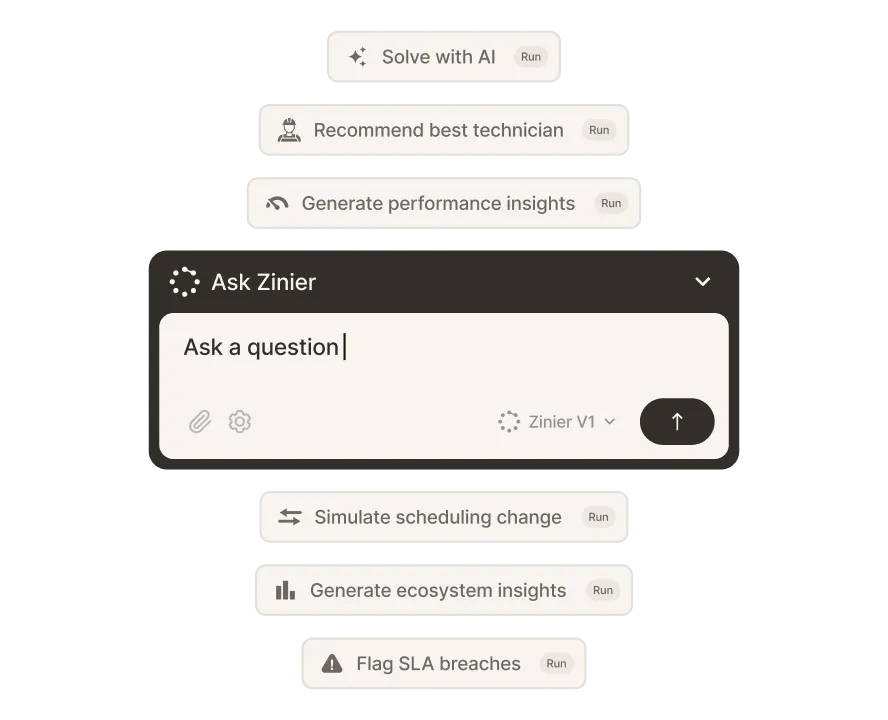
Adaptive AI monitors your operations to answer queries, surface insights and simulate how changes impact KPIs.
Modules



Studio
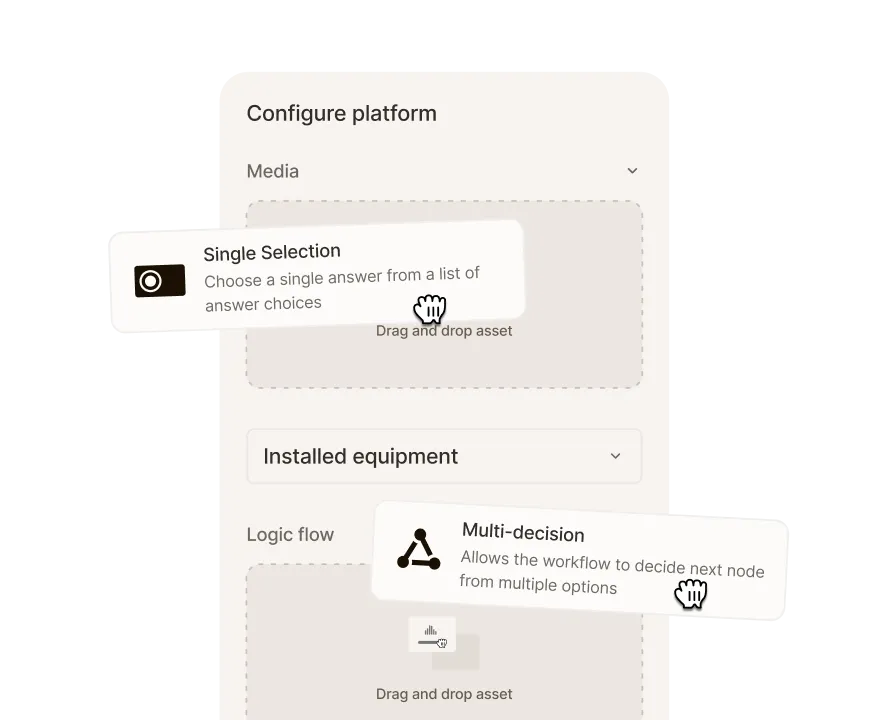
Conversational AI works with your teams to optimize, adapt, and configure any part of the platform.
Modules



A continuous cycle of improvement.
Every action creates insight, every insight drives change, and every change improves the next cycle. With Zinier FSM, your business is ready to respond rapidly to change, optimize for greater efficiency and evolve to meet tomorrow’s challenges.
Sync
Zinier FSM connects seamlessly to ERP, CRM, asset management, OSS/BSS, ticketing and other enterprise systems.
Intelligence
Understand your business. Surface what's changing.
Intelligence monitors your operations in real time, spotting breaches, overruns and emerging risks as they happen, then recommends next actions based on simulated impact.
Core
Your operations, running live day-to-day.
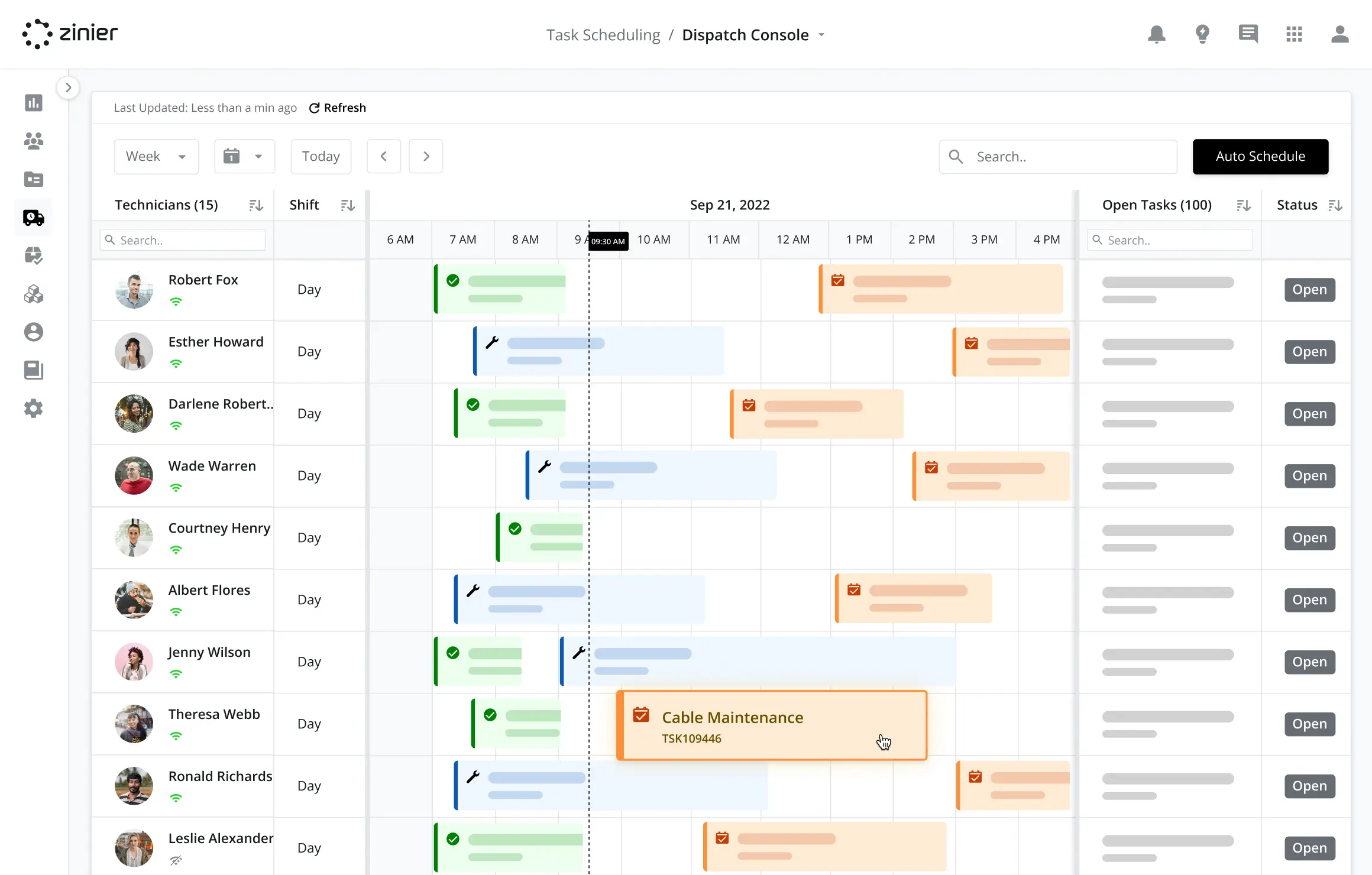
The Core library of modules mirrors every field workflow from scheduling and dispatch to inspections, compliance and customer service.
Studio
Act on insights. Evolve and optimize.
Use Studio's no-code tools and conversational AI to turn recommendations into change. Update workflows, configurations and integrations to match business needs.
We know change is the only constant.
Most FSM software was built for a world where change was slow. Zinier FSM thrives on it. Adapting to the way you work today and evolving to meet the challenges you’ll face tomorrow.
Zinier FSM platform | Most field service software | |
Configuration | Operations teams configure, no code, no delay. | IT or consultants required for every change. |
Deployment | Live in weeks. Continuous improvement built in. | 12–24 months. Long upgrade cycles. |
AI capability | Configurable AI baked in, understands FSM. | Generic AI bolted on, not field-specific. |
Adaptability | Low-code/no-code. Evolves as your business does. | Rigid. Change means cost, delay and disruption. |
Integration | Low-code/no-code. Evolves as your business does. | Rigid. Change means cost, delay and disruption. |
Contractor management | Full governance and control at scale. | Manual coordination. Limited visibility. |
Mobile experience | Mobile-first. Guided workflows, real-time data. | Basic apps. Poor offline capability. |
Scalability | Cloud-native. Scales without replatforming. | Replatforming required as you grow. |




















Ready to explore further?
Let’s talk about what Zinier FSM could do for your operations.
FAQs
Frequently asked questions
Yes. Zinier is designed for enterprise field service management, where work spans multiple regions, languages, and business units. Scheduling scales to large technician workforces, and Studio lets each region configure its own processes on the same platform while head office keeps a single view of operations across countries. To see examples of multinational enterprise deployments, read our customer case studies.
Zinier FSM is built around AI, rather than bolting it on as an added feature. The configurable Intelligence layer integrates field service AI into every part of the platform, helping technicians troubleshoot on the job, surfacing insights that shape scheduling and dispatch decisions, and keeping customers informed about task progress. The built-in AI shows its reasoning transparently, and decisions always have a human in the loop.
Yes, Zinier FSM is a low-code, readily configurable platform. The Studio layer allows business and operations teams to build tasks, workflows, and recommendations through visual interfaces, guided by conversational AI. That means changes such as editing a form, configuring how an integration works or adjusting a workflow, don't have to wait for IT team availability or a platform update from the vendor.
Zinier FSM connects to CRM, ERP, billing, asset management, OSS/BSS, ticketing, and other enterprise systems through an API-first, workflow-driven architecture. The Core layer offers prebuilt integrations for leading enterprise platforms, while Studio provides a low-code integration platform where teams can quickly develop and deploy new integrations as their stack evolves.
Yes. Zinier FSM is a cloud-based field service management platform. Office teams use it through a web browser, and technicians use the mobile app in the field. No on-premises software needs to be installed or maintained, and Zinier delivers updates centrally.
The Zinier field service management platform has three pillars. Core runs day-to-day field service operations, including scheduling, dispatch, inventory, assets, and the mobile workforce. Intelligence is integrated, configurable AI that monitors operations in real time to answer queries, surface insights and interact with field teams and customers through workflow-specific agents. Studio lets teams optimize, adapt, and configure any part of the platform with a drag-and-drop interface guided by conversational AI.