Intelligence that adds focus, not noise.
AI agents and adaptive AI monitor your operations and your data in real time, measured against goals you set, to answer questions and surface the insights that improve your KPIs.
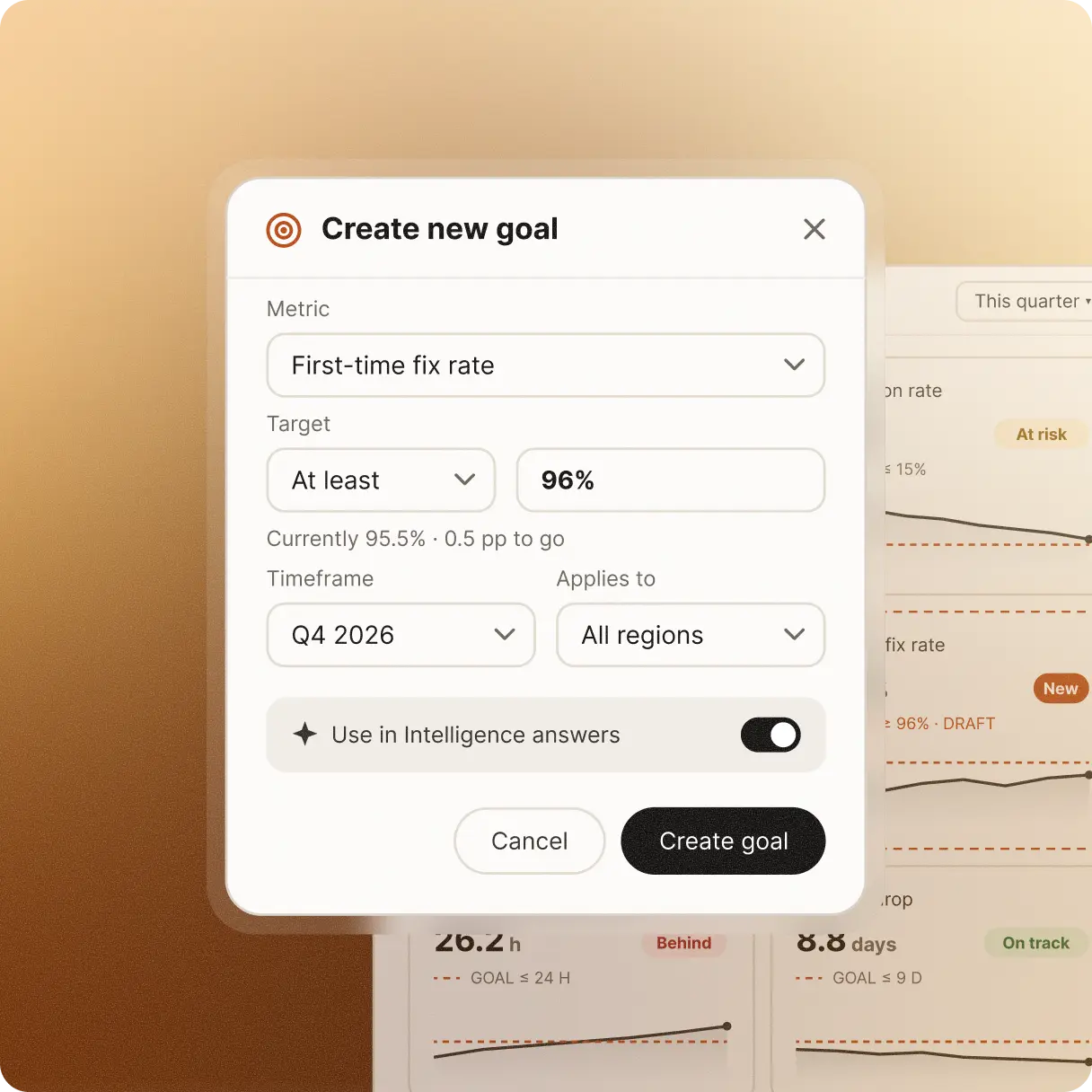
Start with the goals that matter to your operation.
Tell Zinier Intelligence what good looks like. Set the KPIs that define success for your field teams, from first-time fix rate to SLA compliance, and track performance against them in one place. The Intelligence layer then contextualizes every answer and insight against those goals.
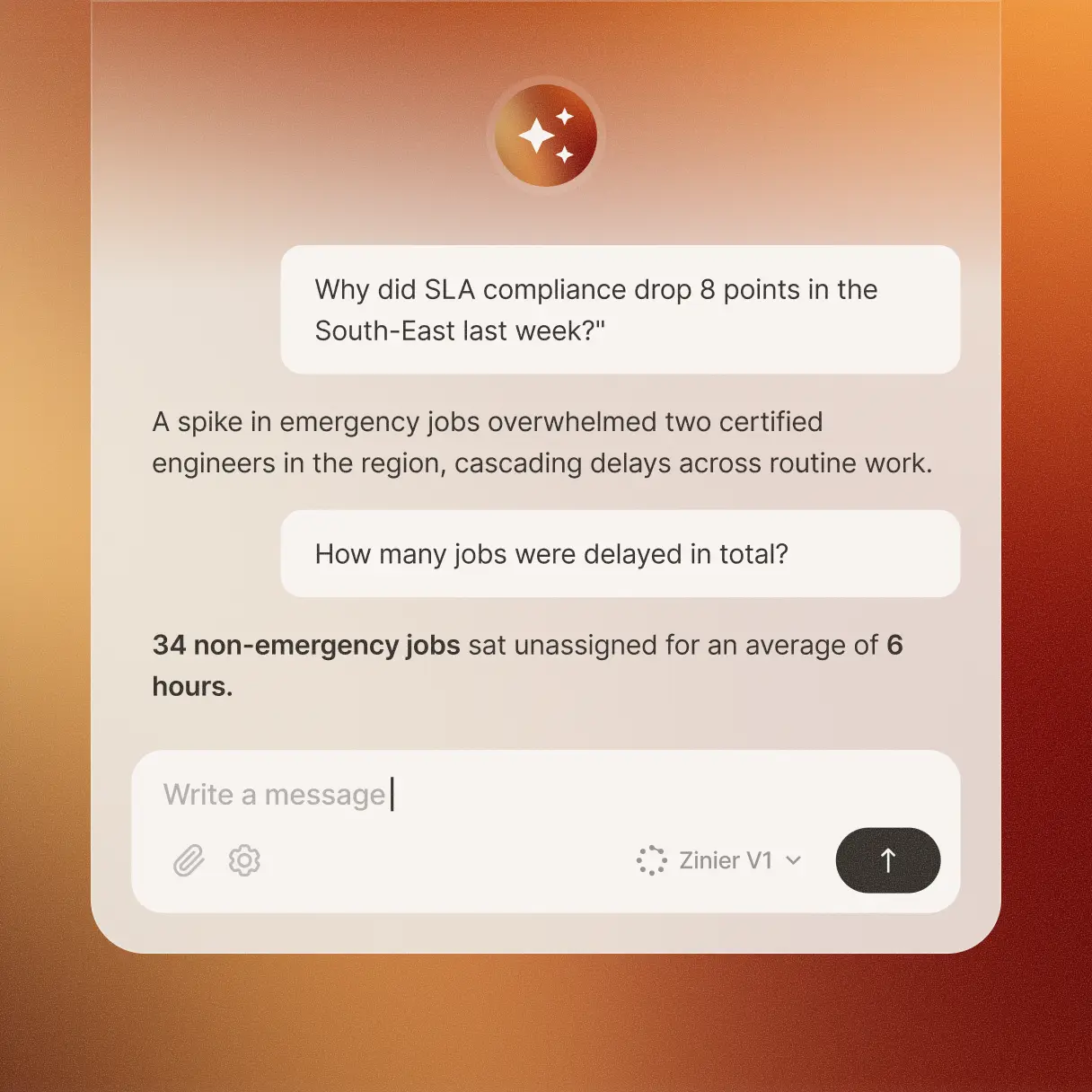
Ask operational questions and get clarity, fast.
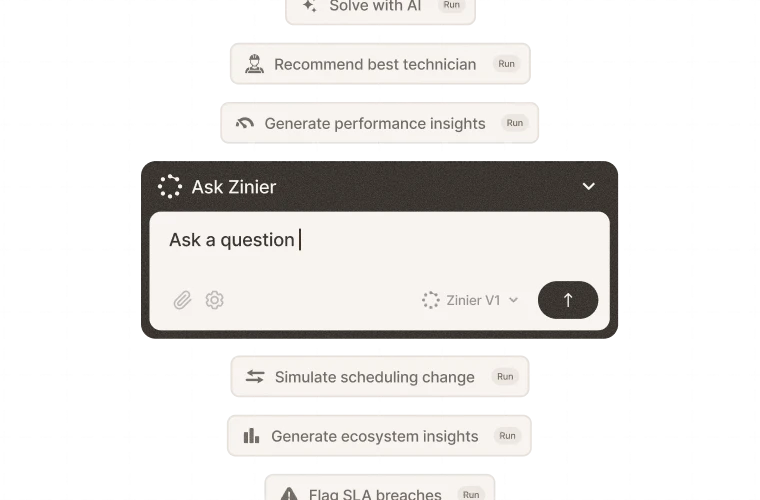
Chat to Zinier FSM about any aspect of your operations: ask for updates on performance, query anomalies in reports or dig into the detail on specific KPIs. Zinier Intelligence has all the context it needs, with real-time access to all of the data in your platform, giving you actionable insights to optimize your operations.
Surface and solve business-critical issues.
Zinier FSM is constantly monitoring your operations in the background and proactively surfaces insights when something looks out of the ordinary. Back office teams get advance notice of breaches with AI support. Field teams have instant access to troubleshooting when a job doesn’t go as planned.
Predict breaches
Zinier FSM monitors every active work order against your SLA commitments in real time, flagging at-risk jobs 30–60 minutes before breach.
Query decisons
Ask why a job wasn't assigned, or why Tech A was chosen over Tech B. Skill gap? Travel time? Certification? Every decision is explained.
Simulate schedules
Adjust a scheduling rule or shift a priority weighting and see the simulated impact against historical data before you commit.
Share knowledge
Every technician gets instant access to troubleshooting guidance, asset history, and resolution support on their device, on every job.
Optimize performance
Identify what drives top-performer results and replicate across your entire workforce. Shorten onboarding and time-to-competence.
Keep control
Zinier FSM proposes. Your team decides. Every recommendation must be reviewed and approved before it becomes an action.
AI agents that interact with Zinier FSM directly
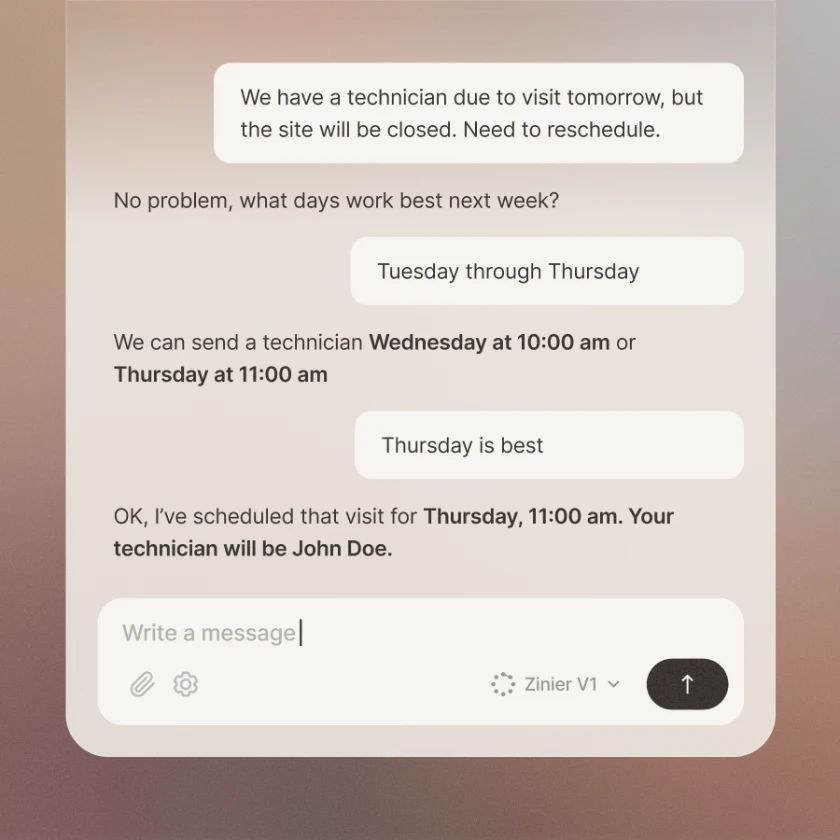
Deploy workflow-specific agents so that external users can interact with the Intelligence layer. Give customers self-service access to a voice agent that handles appointment booking or rescheduling. Let field techs report back on completed jobs with a quick call, not a long online form.
One platform, three layers
Zinier FSM is based on three interconnected layers. Each layer adds distinct value, and together they form a cycle of improvement that delivers compounding benefits over time.
You are here
Go to
Core

Core
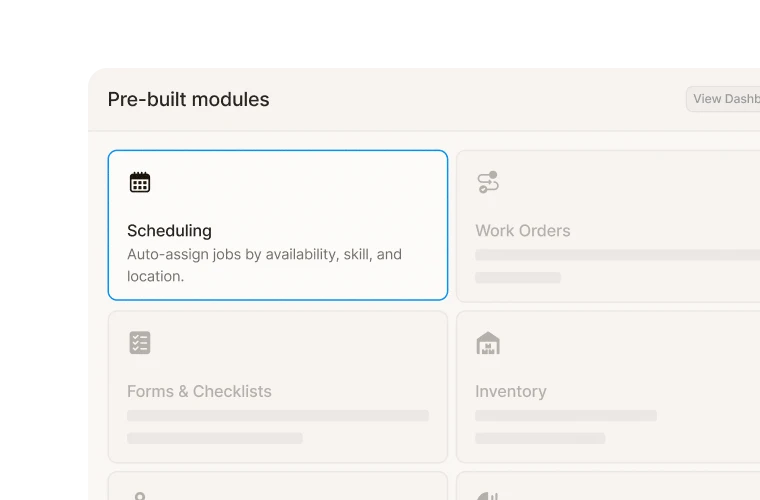
Pre-built workflows, modules, and integrations form a digital model of your operations that delivers value from day one.
You are here
Go to
Intelligence

Intelligence
Adaptive AI monitors your operations to answer queries, surface insights and simulate how changes impact KPIs.
You are here
Go to
Studio

Studio
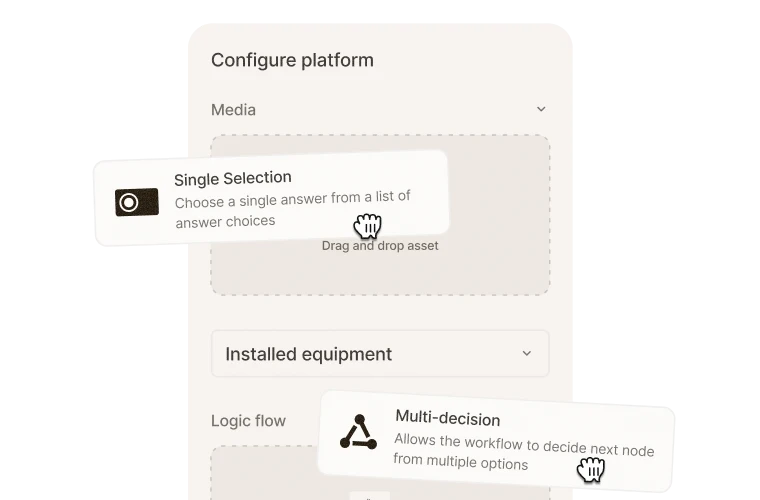
Optimize, adapt, and configure any part of the platform with a drag-and-drop interface guided by conversational AI.
AI that knows your operation inside out.
Issues identified, simulated, and resolved. So you can field anything.



FAQs
Frequently asked questions
Predictive maintenance uses data about equipment condition and history to estimate when an asset is likely to need service. That lets teams plan work before a failure happens, reducing downtime. In Zinier FSM, the Asset Management module tracks asset catalogs, lifecycles, and service history, and the Intelligence layer uses this data to generate work orders when maintenance is due.
Yes. Explainable scheduling is central to the platform. When the Intelligence layer recommends a schedule change, it shows the factors behind that choice, such as technician skills, distance, availability, and priority. Dispatchers can check the reasoning and, if necessary, override it or adjust the rules. That means every decision made by Zinier FSM’s configurable AI is easy to audit and easy to trust.
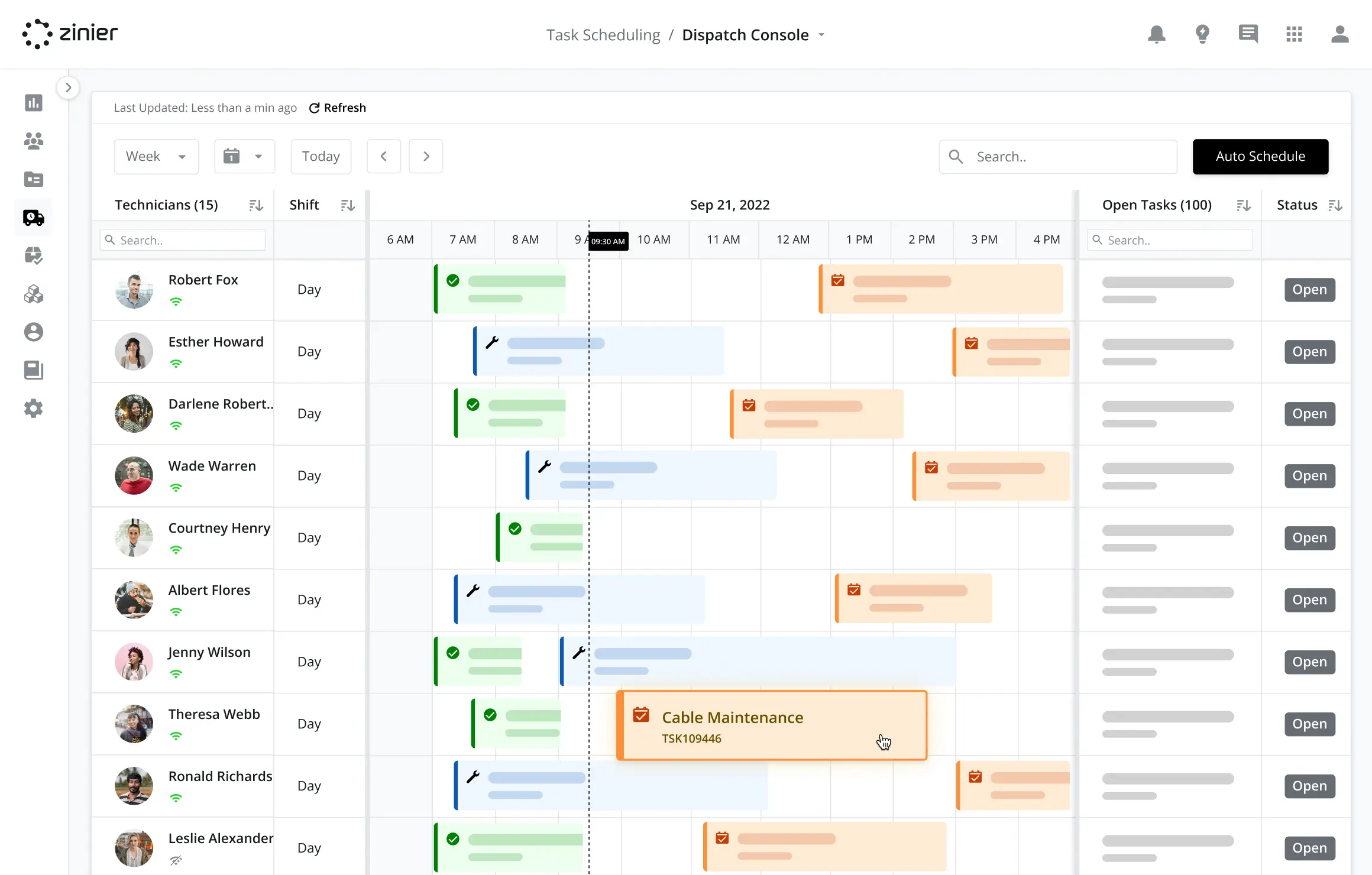
Yes. Zinier FSM’s Scheduling & Dispatch module is built for large mobile workforces with multiple constraints, such as varied skills, regions, shift patterns, and contractor teams. Scheduling maps to your use cases, not a generic model: each organization sets its own constraints, rules and priorities.
Field service automation means handling repeatable steps without manual input. Zinier FSM automates parts of scheduling and dispatch, such as assigning routine jobs. It also automates back-office workflows, such as creating follow-up work orders, sending customer updates, and routing approvals. Teams choose which steps to automate and set the rules in Studio.
AI in field service uses artificial intelligence to support decisions people would otherwise make manually, streamlining workflows for greater efficiency and throughput. Common examples are assigning jobs to technicians, estimating how long work will take, and flagging equipment that may need attention. In Zinier FSM, the Intelligence layer monitors operations 24/7 and surfaces insights and recommended actions that managers or dispatchers can review and implement.