Customer Communications
Customer notifications to suit your needs and theirs
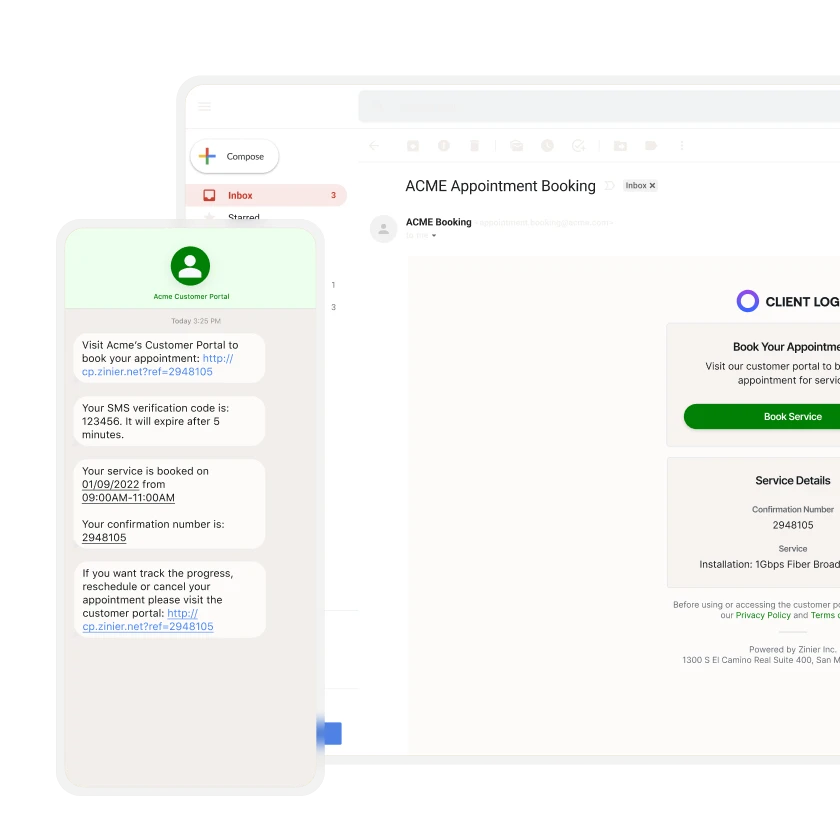
Control how and when your customers are notified throughout their appointment booking journey.



Customer Communications
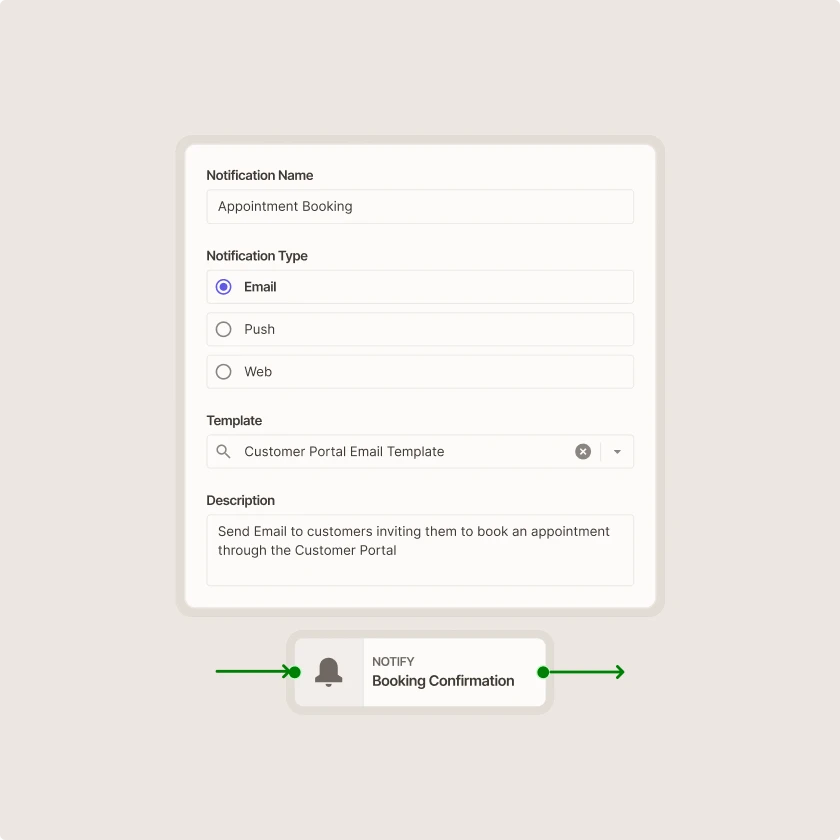
Configure email and SMS notifications
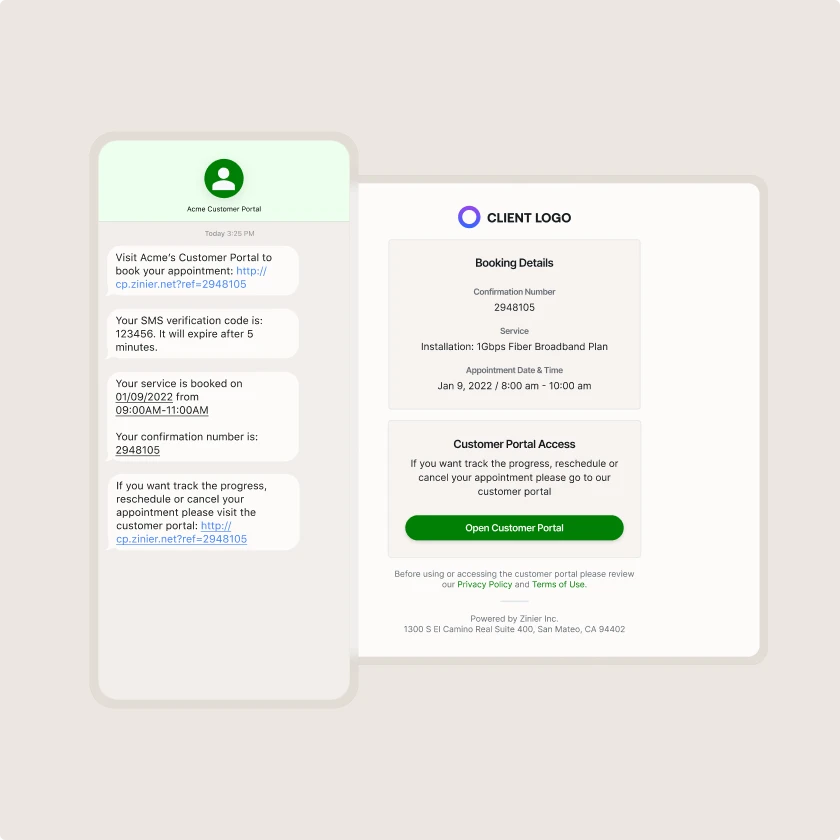
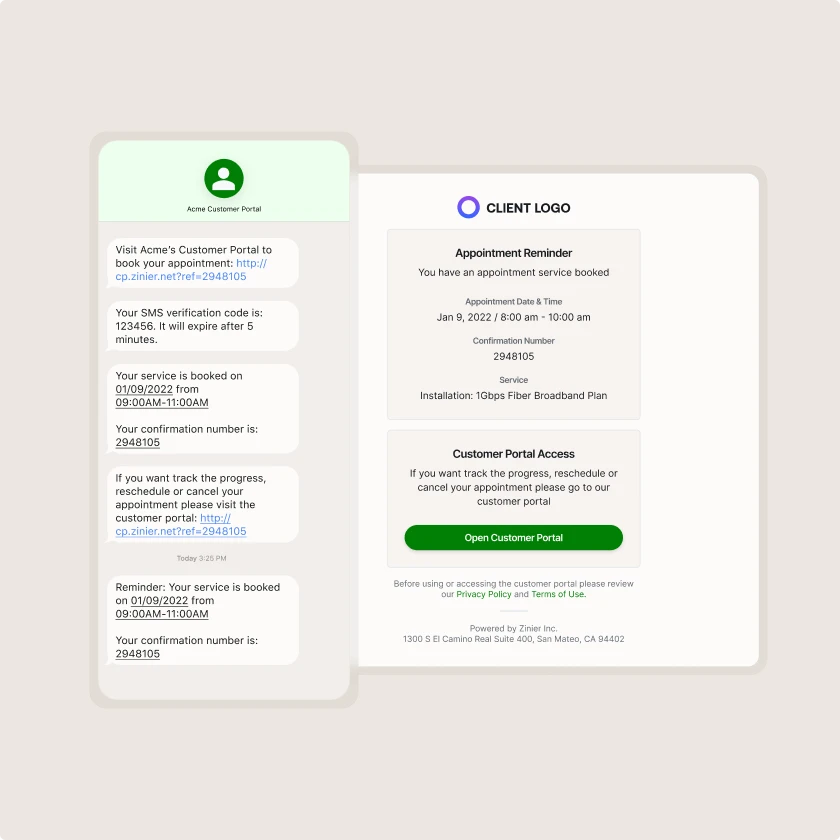
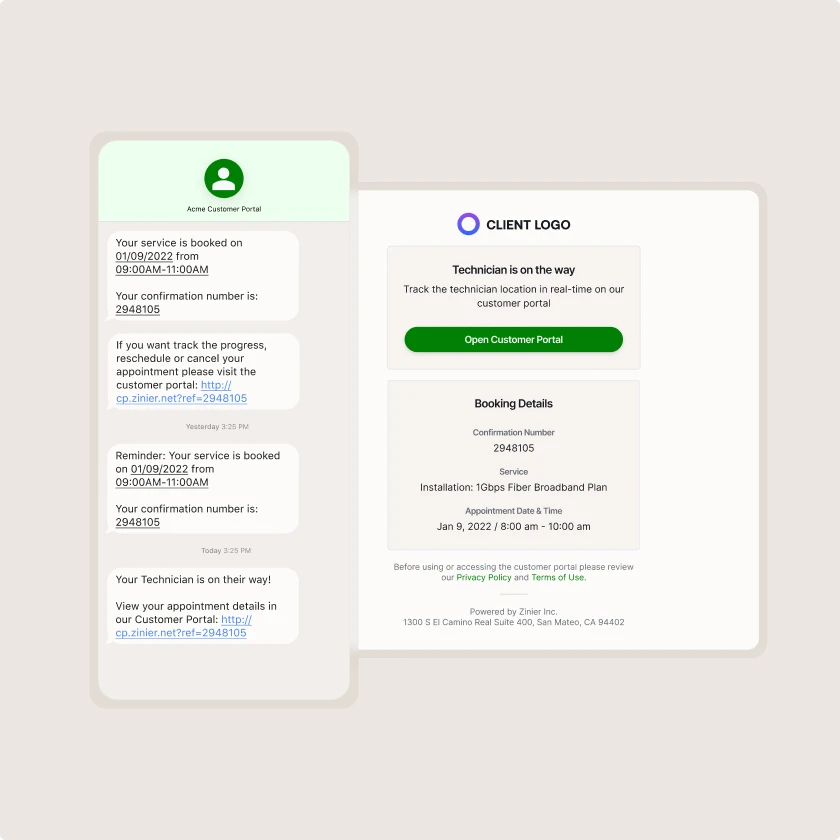
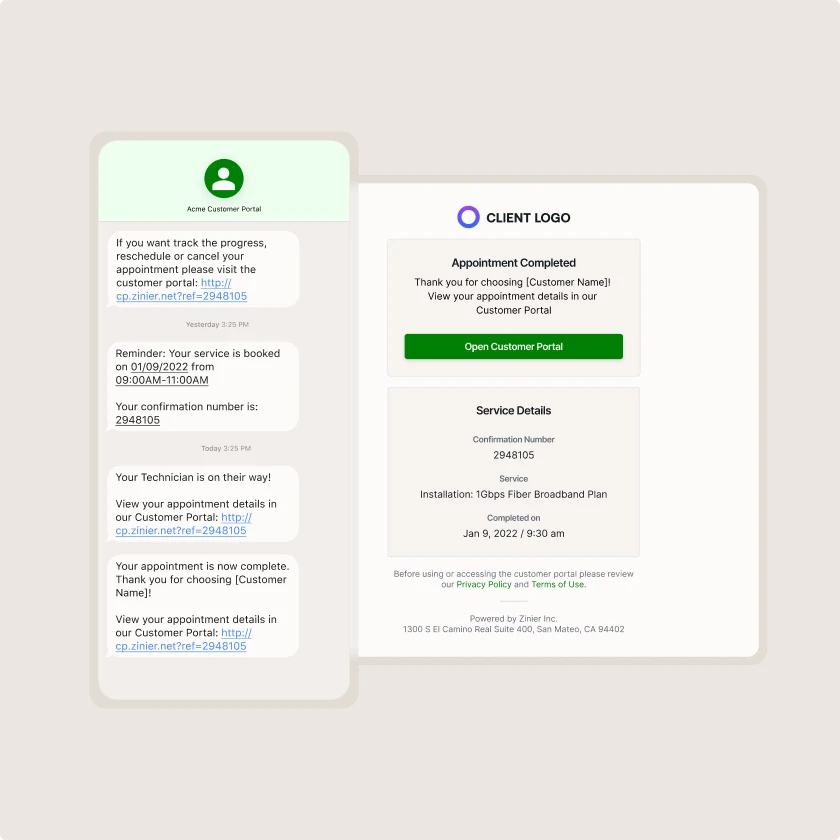
Admins can manage the notification content and delivery path (SMS or Email) to suit their appointment needs.
Customer Communications
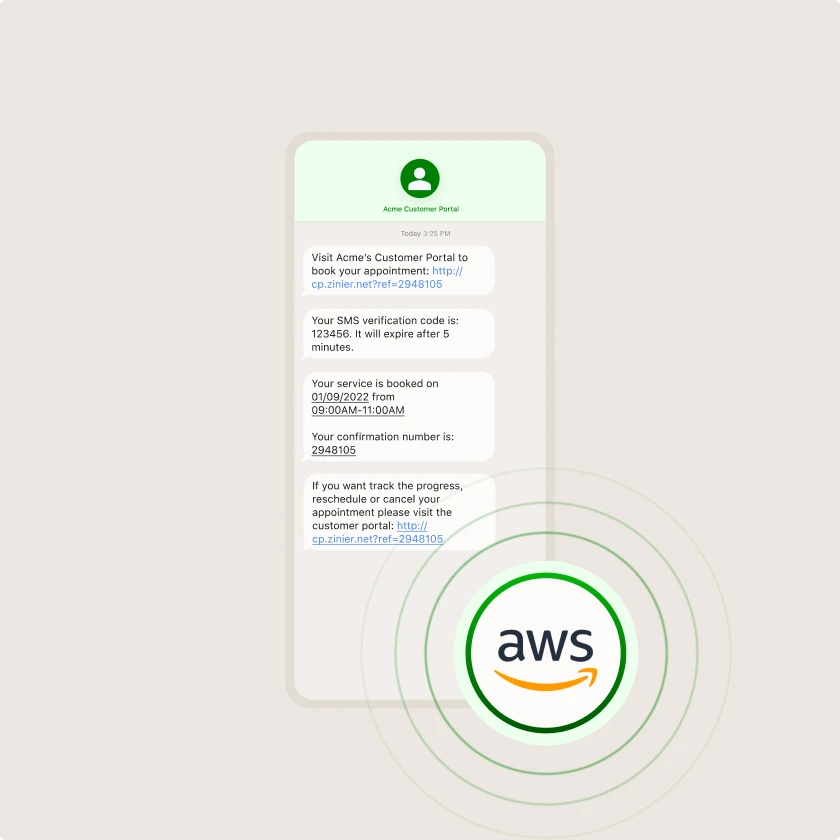
Default SMS notifications with AWS
Zinier leverages the robust capabilities of Amazon Web Services to deliver SMS notifications.
Customer Communications
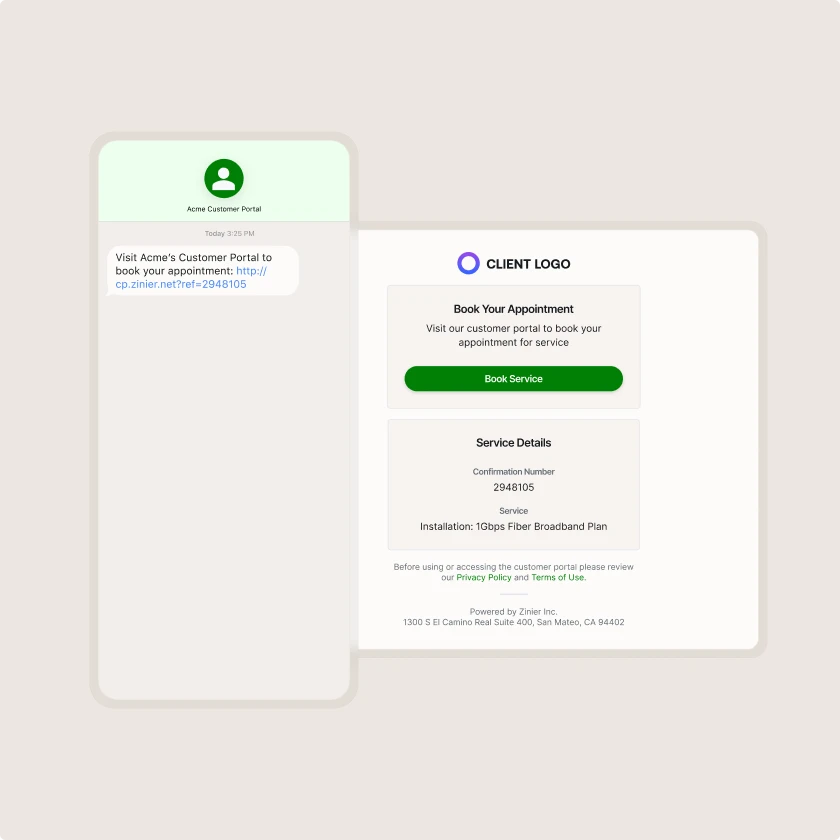
Not just for the back office
Empower technicians to seamlessly capture asset information while in the field
Zinier comparison
Most FSM software was built for a world where change was slow.
Zinier FSM thrives on change. Adapting to the way you work today and evolving to meet the challenges you’ll face tomorrow. Your operations, your rules.
Zinier FSM platform | Most field service software | |
Configuration | Operations teams configure, no code, no delay. | IT or consultants required for every change. |
Deployment | Live in weeks. Continuous improvement built in. | 12–24 months. Long upgrade cycles. |
AI capability | Configurable AI baked in, understands FSM. | Generic AI bolted on, not field-specific. |
Adaptability | Low-code/no-code. Evolves as your business does. | Rigid. Change means cost, delay and disruption. |
Integration | Low-code/no-code. Evolves as your business does. | Rigid. Change means cost, delay and disruption. |
Contractor management | Full governance and control at scale. | Manual coordination. Limited visibility. |
Mobile experience | Mobile-first. Guided workflows, real-time data. | Basic apps. Poor offline capability. |
Scalability | Cloud-native. Scales without replatforming. | Replatforming required as you grow. |



Tomorrow won't look like today
Get a field service management platform that evolves as you do.



Explore other Core Modules


FAQs
Frequently asked questions
Yes. Messages can be sent automatically when a job's status changes, for example, when it's scheduled, when the technician is on the way, or when the work is complete. Teams set the triggers, timing, and message content in Studio to create custom field service automation for different use cases.
The difference is who starts the interaction. Customer communications refers to outreach that Zinier FSM sends, such as confirmations, reminders, and arrival updates. The Customer Portal is a self-service interface where customers go to raise requests, book visits, or check statuses. Most organizations use both, and the two share the same job and schedule data.
Zinier FSM can be configured to send customer notifications by SMS, email and push notifications via any API. Organizations choose which channels to use for each message type and can configure the wording and timing of each message to match their brand and tone.
Zinier FSM sends customers updates based on the live schedule. Customers receive a confirmation when an appointment is booked, a reminder before the visit, and a notice when the technician is on the way. If the technician is delayed, customers are told the new arrival time, reducing the volume of “Where’s my technician?” calls.