Dynamic Audits
Audit feedback when and where it matters most
When field technicians get timely and actionable feedback, efficiency goes up and repeat site visits go down



Dynamic Audits
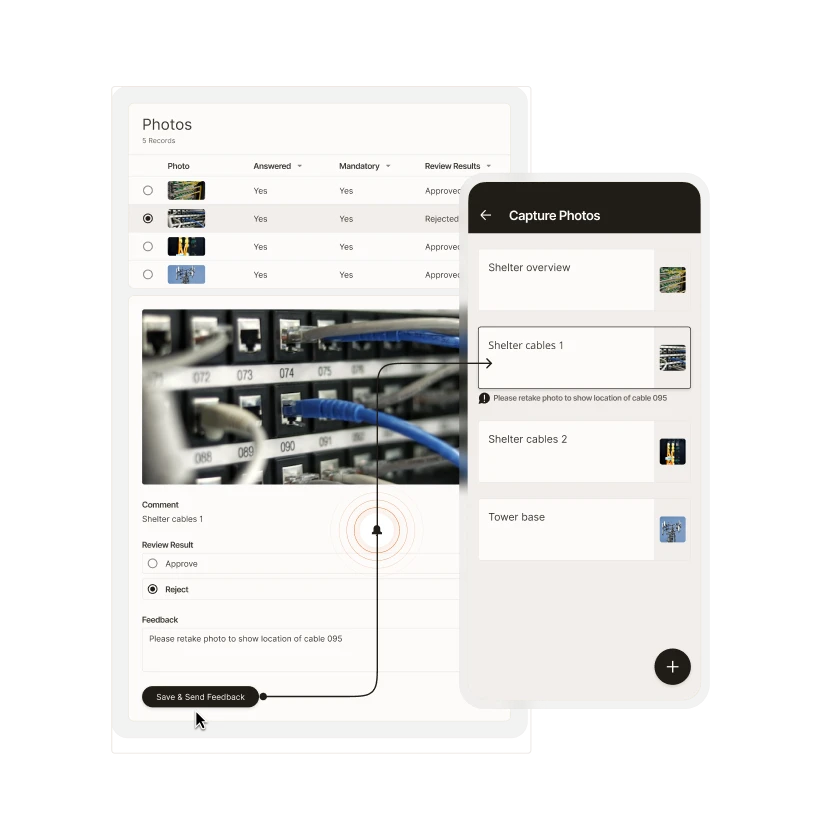
Reduce the number of truck rolls with real-time feedback
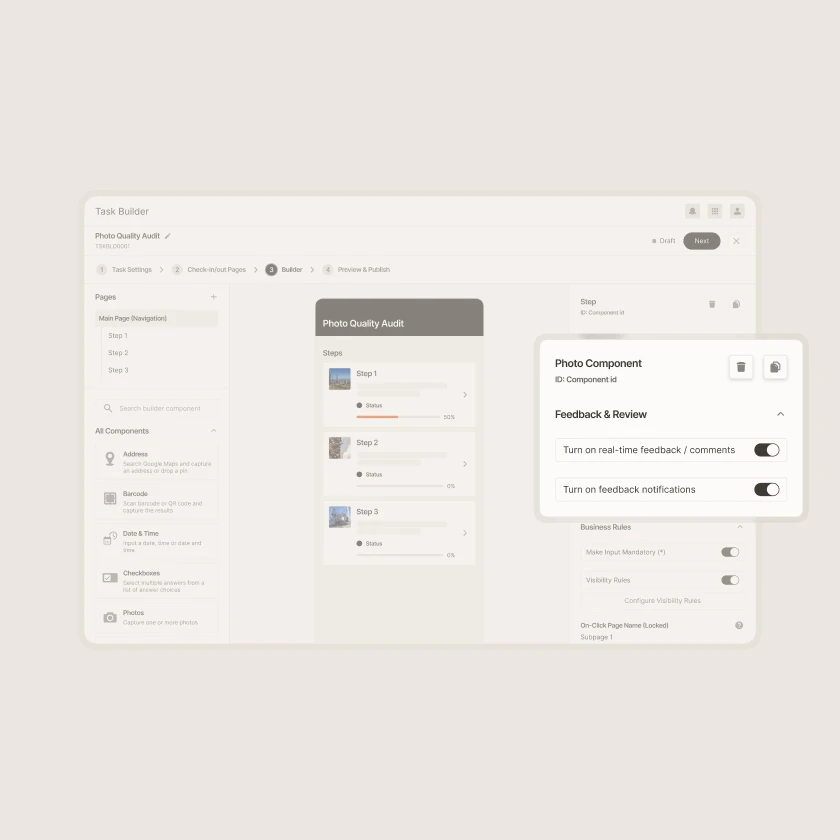
Auditors can view task progress and submit targeted feedback in real time, reducing manual work and improving feedback efficiency.
Dynamic Audits
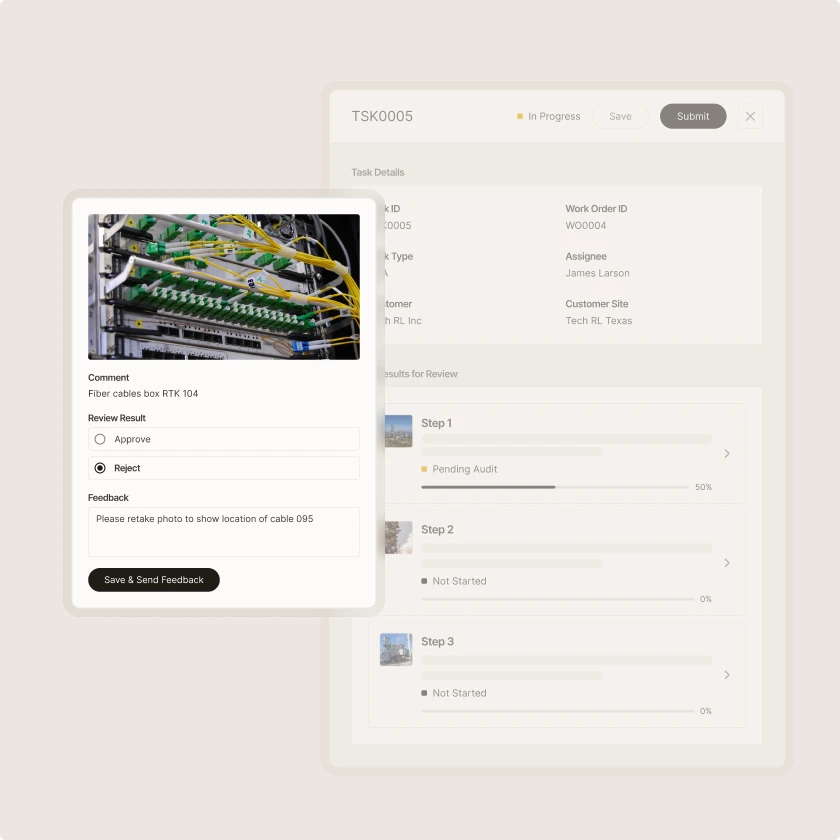
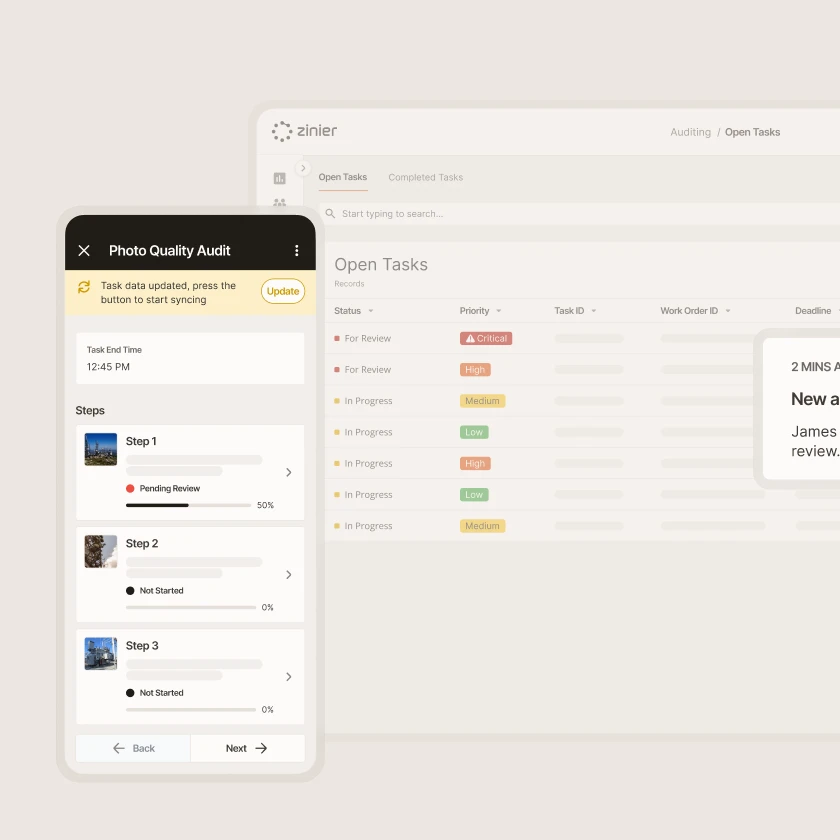
Get instant updates as audits progress
Notification alert back office and field teams when actions are required and feedback submitted so they stay in-sync as audits progress.
Dynamic Audits
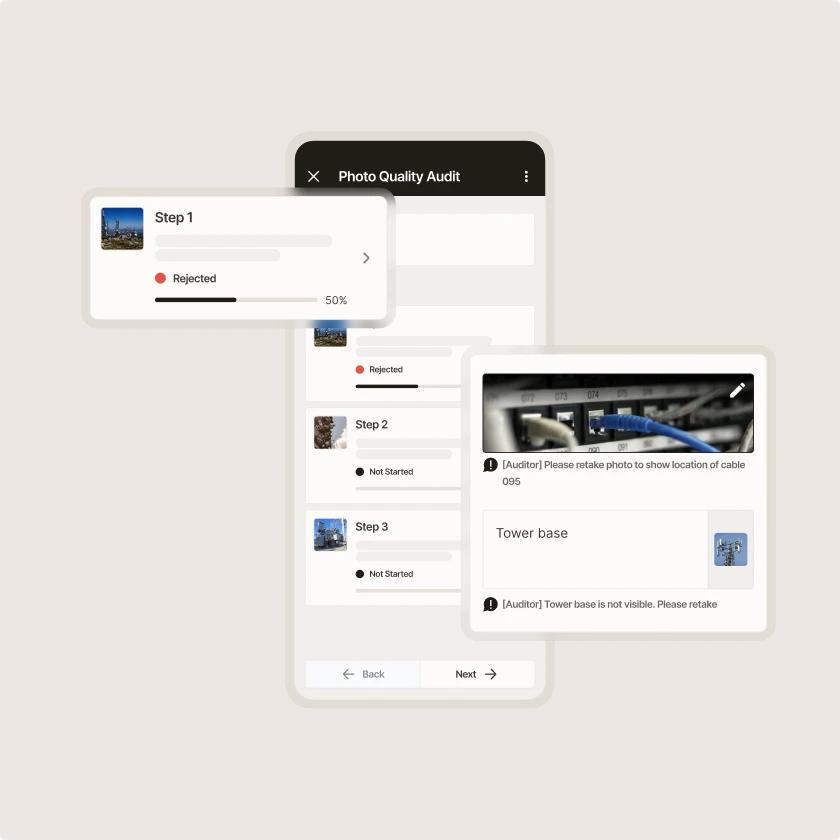
Make feedback actionable with component-level comments
Technicians can view rejected data and comments at the component level so they know exactly where to act or what to recapture.
Dynamic Audits
Modify audit workflows without touching a line of code
Use our no-code Task Builder to decide which audit fields need to be approved or rejected, and modify audit workflows in real time as business requirements change.
Zinier comparison
Most FSM software was built for a world where change was slow.
Zinier FSM thrives on change. Adapting to the way you work today and evolving to meet the challenges you’ll face tomorrow. Your operations, your rules.
Zinier FSM platform | Most field service software | |
Configuration | Operations teams configure, no code, no delay. | IT or consultants required for every change. |
Deployment | Live in weeks. Continuous improvement built in. | 12–24 months. Long upgrade cycles. |
AI capability | Configurable AI baked in, understands FSM. | Generic AI bolted on, not field-specific. |
Adaptability | Low-code/no-code. Evolves as your business does. | Rigid. Change means cost, delay and disruption. |
Integration | Low-code/no-code. Evolves as your business does. | Rigid. Change means cost, delay and disruption. |
Contractor management | Full governance and control at scale. | Manual coordination. Limited visibility. |
Mobile experience | Mobile-first. Guided workflows, real-time data. | Basic apps. Poor offline capability. |
Scalability | Cloud-native. Scales without replatforming. | Replatforming required as you grow. |



Tomorrow won't look like today
Get a field service management platform that evolves as you do.



Explore other Core modules


FAQs
Frequently asked questions
Dynamic audits ensure checks match the actual conditions on site. When an audit finds a risk, it asks for more detail instead of letting the technician move on. Every answer is recorded with time, location, and evidence, which gives teams reliable data for compliance and safety reporting.
Yes. Audits can branch based on the technician's answers, measurements, or readings. They can also adapt to the asset type, location, or past inspection results. For example, a reading outside an accepted range can add follow-up checks or ask for supporting evidence. Teams can build and edit these rules in Studio via a no-code drag-and-drop interface, guided by conversational AI.
Standard forms and checklists ask the same questions in the same order every time. It suits routine tasks that should be done identically on each visit. A dynamic audit adjusts its questions based on on-site conditions and the answers already given, so it suits more complex inspections where what a technician finds affects the actions they should take next.
Dynamic audits are guided inspections that change as the technician works through them. The next question depends on the previous answer, so a reported fault can lead to more detailed checks while a pass moves the technician on to the next step. Asset management inspection software uses dynamic audits for safety, quality, and asset inspections, saving results to the asset record.