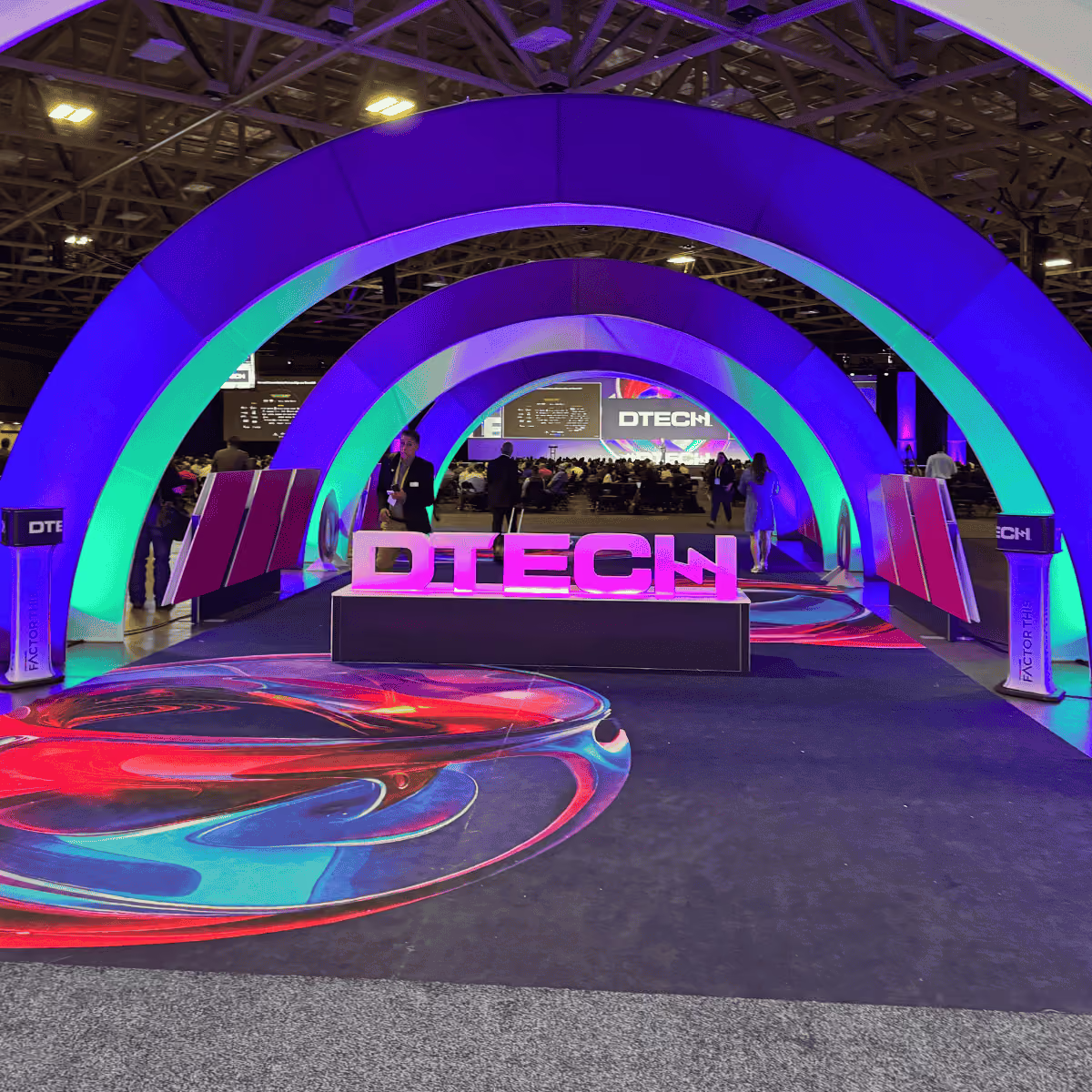
This week, our team attended DistribuTECH 2025, one of the utility industry's premier gatherings for innovation and digital transformation. Our VP of Industry Solutions, George Thompson, spent time connecting with utility leaders, technology partners, and industry experts to gather insights on where field service management is heading in this rapidly evolving sector.
"DistribuTECH always serves as an incredible barometer for the utility industry," notes George. "This year, the conversations were particularly focused on integration, intelligence, and flexibility – three themes that are fundamentally reshaping how utilities approach field operations."
After analyzing the discussions and demonstrations from the event, three transformative trends emerged that utility companies should be paying close attention to:
1. The Convergence of EAM and FSM
One of the most significant shifts evident at DistribuTECH was the accelerating convergence between Enterprise Asset Management (EAM) and Field Service Management (FSM) systems.
"The lines between asset management and field service are completely blurring," George observed. "What we heard repeatedly from utility leaders was a desire to move beyond the traditional boundaries between these systems. They're looking for what some vendors are calling 'EAM+' or 'FSM+' – solutions that give them visibility into both their assets and their field service operations in one unified view."
This convergence makes perfect sense from an operational perspective. When maintenance teams can seamlessly access asset health data while in the field, and when asset managers can directly connect maintenance history to performance metrics, utilities gain a more holistic approach to infrastructure management.
"The utilities that are getting this right are creating a continuous feedback loop," explains George. "Asset data informs maintenance activities, and field reports enhance asset intelligence. It's transforming how these organizations approach infrastructure lifecycle management."
2. GIS Integration: Location Intelligence Takes Center Stage
Geographic Information Systems (GIS) integration emerged as another critical capability for next-generation utility field operations. This was particularly evident in discussions around managing complex, distributed infrastructure networks.
"Think about a section of an electricity pylon, a fiber optic network with connection points, or an oil pipeline," George explains. "Traditionally, GIS systems have been standalone tools used primarily for network planning. But we're seeing an increasing need to link GIS directly to field service management."
This integration provides critical context for field technicians, who can now visualize exactly how the assets they're servicing connect to the broader network.
"When a technician arrives at a pole and discovers it's not the one identified in the work order, having that visual network context is invaluable," says George. "Without GIS integration, they're working blind to the broader system implications. With it, they can make informed decisions about how to proceed while understanding network dependencies."
For utilities managing vast infrastructure networks that span hundreds or thousands of miles, this spatial intelligence is becoming non-negotiable for efficient field operations.
3. Finding the Right Balance: Flexibility Without Compromise
The third key trend highlighted at DistribuTECH was the ongoing struggle utilities face in finding technology solutions that balance specialization with adaptability.
"We saw competing approaches from different vendors," George notes. "Some were touting their extreme customization capabilities – essentially promising to mold their platform entirely around a utility's existing processes. Others were showcasing more standardized approaches that lack the industry-specific functionality utilities need."
This tension reflects a fundamental challenge in the utility sector: how to implement solutions that understand the unique requirements of utility operations without creating inflexible, difficult-to-maintain custom implementations.
"One presentation we attended highlighted how they'd customized a platform to serve eight different divisions within a single utility," George recalls. "But the warning signs were there – when you customize too heavily, you eventually struggle to implement updates and evolve with changing needs. On the flip side, generic platforms that weren't built for utilities often miss critical industry functionality."
The utilities making the most progress are finding platforms that offer industry-specific capabilities with the flexibility to adapt to their unique operational requirements – all without sacrificing future innovation cycles.
Looking Ahead: Integrated, Intelligent Field Operations
As we reflect on these trends from DistribuTECH 2025, a clear picture emerges of where utility field service management is heading. The future belongs to solutions that:
- Bridge the gap between asset management and field operations
- Integrate critical location intelligence directly into workflow
- Provide industry-specific functionality with the flexibility to adapt to each utility's unique needs
"What's most exciting about these trends is how they're converging to create truly intelligent field operations," George concludes. "When utilities connect these dots – linking asset data, spatial intelligence, and flexible workflows – they transform field service from a cost center into a strategic advantage that drives infrastructure reliability, longevity, and performance."
At Zinier, we're building our platform with these exact trends in mind, creating solutions that help utilities bridge these critical gaps while providing the flexibility to adapt to each organization's unique operations.
Want to learn more about how Zinier is helping utilities transform their field operations? Contact our team to schedule a conversation about your specific field service challenges.